BFCM2026)
•
30% Off Multi-App Stacks (CYBER2026)
•
🏛️ Enterprise 21-Day Price-Lock PO (Q4-PO-LOCK)
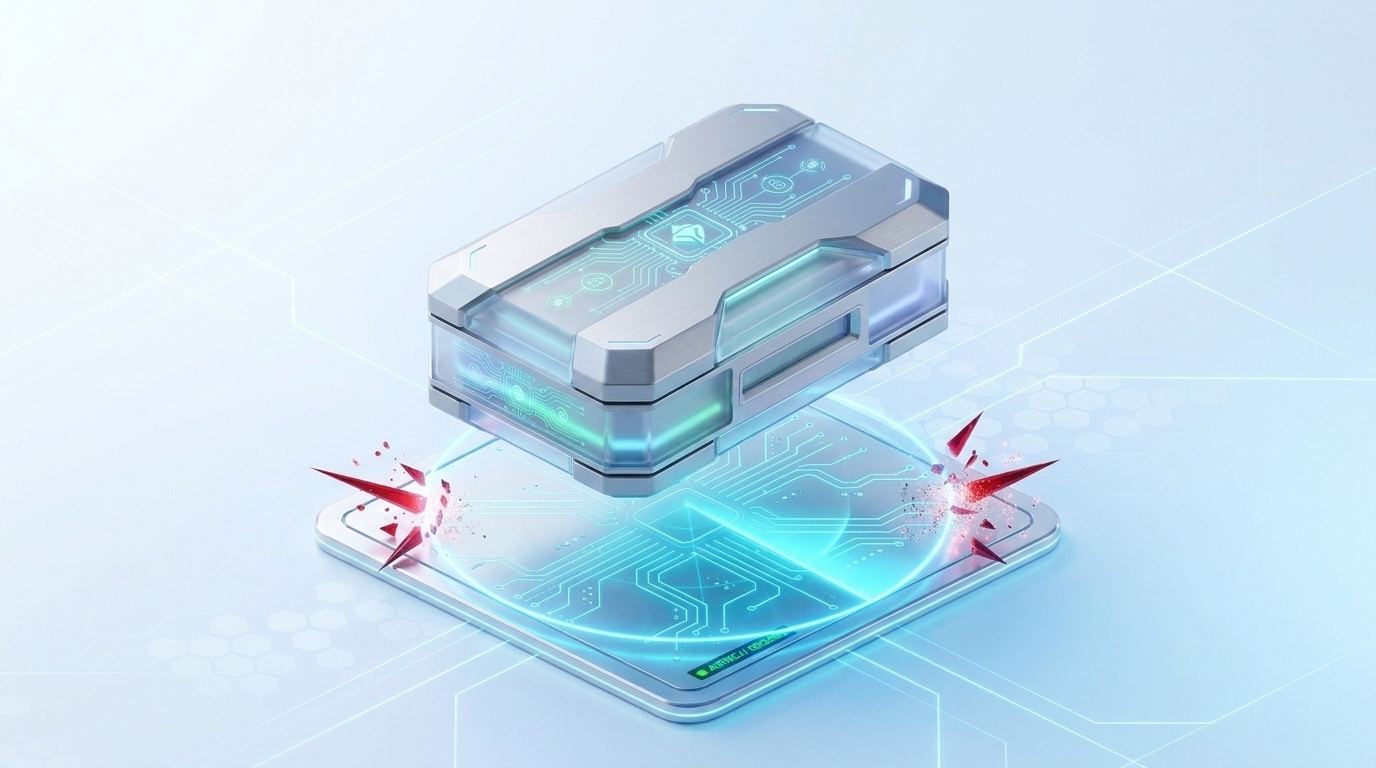
Autonomous cyber deception appliance planting high-value honeytokens, decoy documents, honeypot registry keys, and fake credentials across endpoints. The microsecond an adversary touches a canary, the fleet initiates sub-5ms automated quarantine with zero cloud telemetry.
Real-time daemon startup telemetry and command-line execution trace.
Traditional signature and heuristic detection tools generate thousands of low-confidence alerts every week, inducing severe SOC alert fatigue while adversaries slip past defenses. AlaskaCanary reverses the asymmetry through high-fidelity, sovereign deception: decoy files and honey-credentials are never accessed by legitimate users, meaning every alert is a 100% confirmed intrusion. Operating entirely on-premises in pure Rust with zero cloud callbacks, it triggers native sub-5ms host isolation via AlaskaAirlock the instant ransomware touches a canary.
Architectural comparison for CISOs, SOC Directors, and Threat Emulation Engineers
| Architectural Dimension | Commercial Deception (Thinkst / Illusive / Hologram) | AlaskaCanary™ Sovereign Pure-Rust |
|---|---|---|
|
Alert Privacy & Data Egress
Destination of tripwire telemetry
|
Canary alerts and network triggers stream to vendor SaaS cloud infrastructure or third-party monitoring consoles. | 100% On-Premise Sovereign. Zero cloud callbacks, zero external honeypot management, and zero vendor telemetry egress. |
|
Air-Gap Capability
Operation in disconnected SCADA & defense enclaves
|
Requires complex specialized on-prem proxy appliances or degrades without continuous vendor cloud connectivity. | Native Air-Gapped Operation. Deploys and manages traps natively across isolated LANs, SCADA enclaves, and offline networks. |
|
Ransomware Autonomous Isolation
Response speed when ransomware encrypts decoy files
|
Requires asynchronous cloud webhooks or external API orchestrators; multi-second lag allows hundreds of files to be encrypted. | Sub-5ms Native Reflex. Direct IPC to AlaskaAirlock severs host network access immediately on the very first touched file. |
|
Engine Runtime & Footprint
Resource overhead on target endpoints
|
Python scripts or heavy C#/C++ background agents requiring 100MB+ RAM and risking software conflicts. | Pure Compiled Rust (~9 MB). Operates smoothly in <20 MB RAM with microsecond trigger latencies (<0.4ms). |
|
Licensing & Fleet Economics
Cost scaling across hundreds of endpoints
|
Expensive per-canary cloud subscriptions ($2,500+/appliance) or high-tier EDR license upsells. | Unlimited Sovereign Deployment. Deploy thousands of honeytokens, shares, and credentials with zero per-canary fees. |
Engineered specifically for AlaskaCanary™ with zero legacy bloat and 100% deterministic execution.
Canaries are never accessed by legitimate users. Any interaction represents 100% confirmed adversary reconnaissance or ransomware enumeration.
Generates realistic, syntactically valid spreadsheets, database backups, and text files that attract adversaries during file discovery phases.
Injects decoy credentials into local memory caches; when dumped via Mimikatz or LSASS tampering, alarms trip immediately.
Directly signals AlaskaAirlock to isolate the compromised host in under 5ms, halting ransomware encryption sweeps on the very first file touched.
Measurable speed, memory safety, and zero-cloud resilience. Full technical architecture and specifications are available under Mutual NDA.
Deception technology engine creating high-fidelity honeytokens and decoy files that trap adversaries during internal reconnaissance.
Provides definitive, zero-false-positive intrusion alerts that allow blue teams to act with complete certainty.
Compiled memory-safe pure-Rust execution with deterministic low-latency containment, zero runtime garbage-collection stalls, and tamper-evident local persistence. Request full technical whitepaper under Mutual NDA →
Forces attackers to second-guess every file and credential they discover, drastically slowing lateral movement and forcing errors.
Deterministic cross-walk mapping AlaskaCanary high-fidelity deception and ransomware tripwires to federal mandates.
Catches adversaries enumerating network file shares through strategically placed decoy directories and bait documents.
Deploys fake API keys, database connection strings, and SSH tokens that alert the instant they are accessed.
Sets up decoy SMB and RDP listeners that trigger alarms upon incoming lateral movement connection attempts.
Serves as an early tripwire during ransomware encryption sweeps, triggering automated containment via AlaskaAirlock.
Generates high-fidelity, actionable security alerts indicating unauthorized system reconnaissance activity.
Detects unauthorized internal reconnaissance and lateral movement attempts across corporate subnets.
Creates verifiable, immutable audit records of unauthorized access attempts to decoy assets.
Deploys active deception techniques to detect anomalies and unauthorized activities across the network.
Utilizes honeypots and tripwires to identify malware execution and automated encryption sweeps.
Provides zero-false-positive event feeds to ensure rapid triaging and decisive containment actions.
Deploy these interoperable pure-Rust appliances alongside AlaskaCanary™.
Immutable WORM Storage, Software RAID & threshold quorum recovery M-of-N Quorum
Autonomous Red Team & In-Memory AD Attack Path Graph Solver
Full-Disk & Volume Encryption Attestor with TPM Key-Sealing
Pre-compiled sovereign release with lifetime cryptographic entitlement and zero recurring cloud tax.
Perpetual license for 1 sovereign workstation or air-gapped laptop.
Multi-seat deployment with automated local swarm coordination.
Site license for mission-critical enterprise environments.
Alphabetical Sandwich file decoys, registry/token/network tripwires, driverless memory forensics, and sub-millisecond process freeze / airlock containment.
| Framework ID | Threat Vector | Standalone Protection | Autonomous Fleet Immunity (Patent Pending) | Disposition |
|---|---|---|---|---|
| MITRE T1486 | Data Encrypted for Impact (Ransomware) | deploy_alphabetical_sandwich & verify_sandwich_integrity | Tripped sandwich broadcasts high-priority threat_alerts Fleet Threat Intelligence so peer hosts engage airlock / freeze backup writes. | Detected & Immunized Fleet-Wide |
| MITRE T1112 | Modify Registry | check_registry_tripwires | Emits signed registry-tamper Fleet Threat Intelligence to AlaskaShield / alaskaharden peers. | Detected & Immunized Fleet-Wide |
| MITRE T1552.001 / T1555 | Unsecured Credentials & Credential Store Access | generate_aws_canary_key, generate_windows_cred_lure, & generate_database_canary_row | Propagates touched canary token IDs fleet-wide to AlaskaIdentity / AlaskaGate to revoke compromised sessions. | Detected & Immunized Fleet-Wide |
| MITRE T1021 / T1046 | Lateral Movement & Network Service Scanning | Network decoys: spawn_rdp_decoy, spawn_smb_decoy, spawn_ssh_decoy, spawn_database_decoy, spawn_web_portal_decoy | Shares attacker source IP via verified threat indicators (CrdtDelta) so AlaskaGate / AlaskaSinkhole block the scanner across all hosts. | Detected & Immunized Fleet-Wide |
| MITRE T1003 | OS Credential / Memory Dumping & Key Extraction | dump_process_memory_driverless & scan_memory_keys | Logs ExtractedCryptoKey hashes into tamper-evident signed ledger for forensic recovery. | Blocked / Forensically Preserved |
| MITRE T1489 / Containment | Active Malware Execution | freeze_process (sub-millisecond process freeze) & host network isolation | Shares suspended process cryptographic integrity hash (verified threat indicators) so peers preemptively block the same binary. | Contained & Immunized Fleet-Wide |
| MITRE ATLAS AML.T0024 | Cloud AI Triage Data Leakage | Local AI triage & Local AI endpoints (Local Sovereign AI Triage, Protected Sovereign Engine:L890-L950) | Zero cloud AI APIs; triage summaries stored locally in embedded transactional store (authenticated local encryption) and Tier-2 local semantic index. | Eliminated by Design (Zero Cloud) |